XGIMI Titan Noir Max vs Horizon 20 Max: Side by Side Test
I tested the XGIMI Titan Noir Max side by side with the Horizon 20 Max on a 133-inch ALR screen. Here is how their contrast, color, and brightness compare.
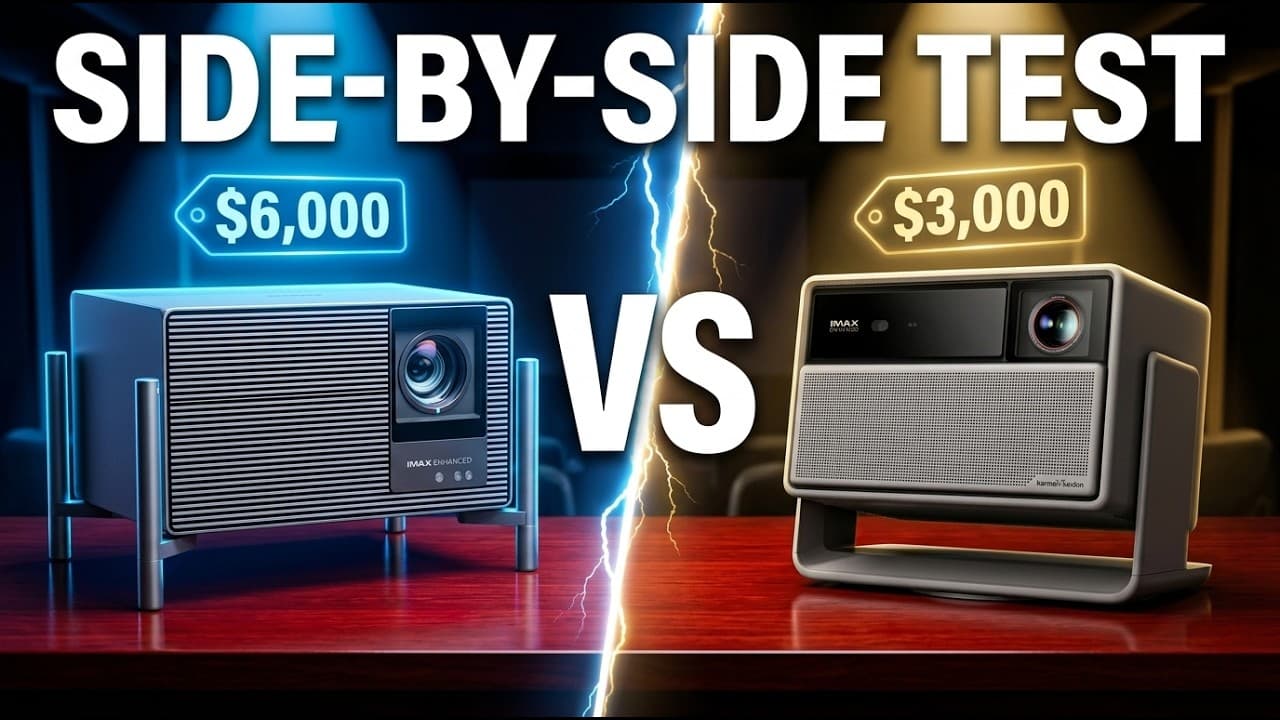
Bekijk de video op YouTubeThe XGIMI Titan Noir Max produces visibly deeper blacks and noticeably harder hitting highlights than the Horizon 20 Max, but it costs roughly double the money. On June 26, 2026, the Titan Noir Max sat at around $6,000 retail after its crowdfunding campaign, while the Horizon 20 Max was priced around $3,000. You are paying double for that last step in contrast and color depth, which means most people should stop and think before spending the extra cash.
I run the Horizon 20 Max daily in my living room at home, and I use the Titan Noir Max daily at my studio. After viewers asked for a direct flagship shootout without smaller budget projectors cluttering the frame, I set both up in the exact same room, projecting onto the exact same screen at the exact same time.
How I set up this side by side projector test
To see real differences between two high-end projectors, you cannot test them on different days or with varying ambient light. Every change in ambient light alters how your eyes perceive shadow detail. I kept both machines in one room and ran them simultaneously onto a 133-inch screen.
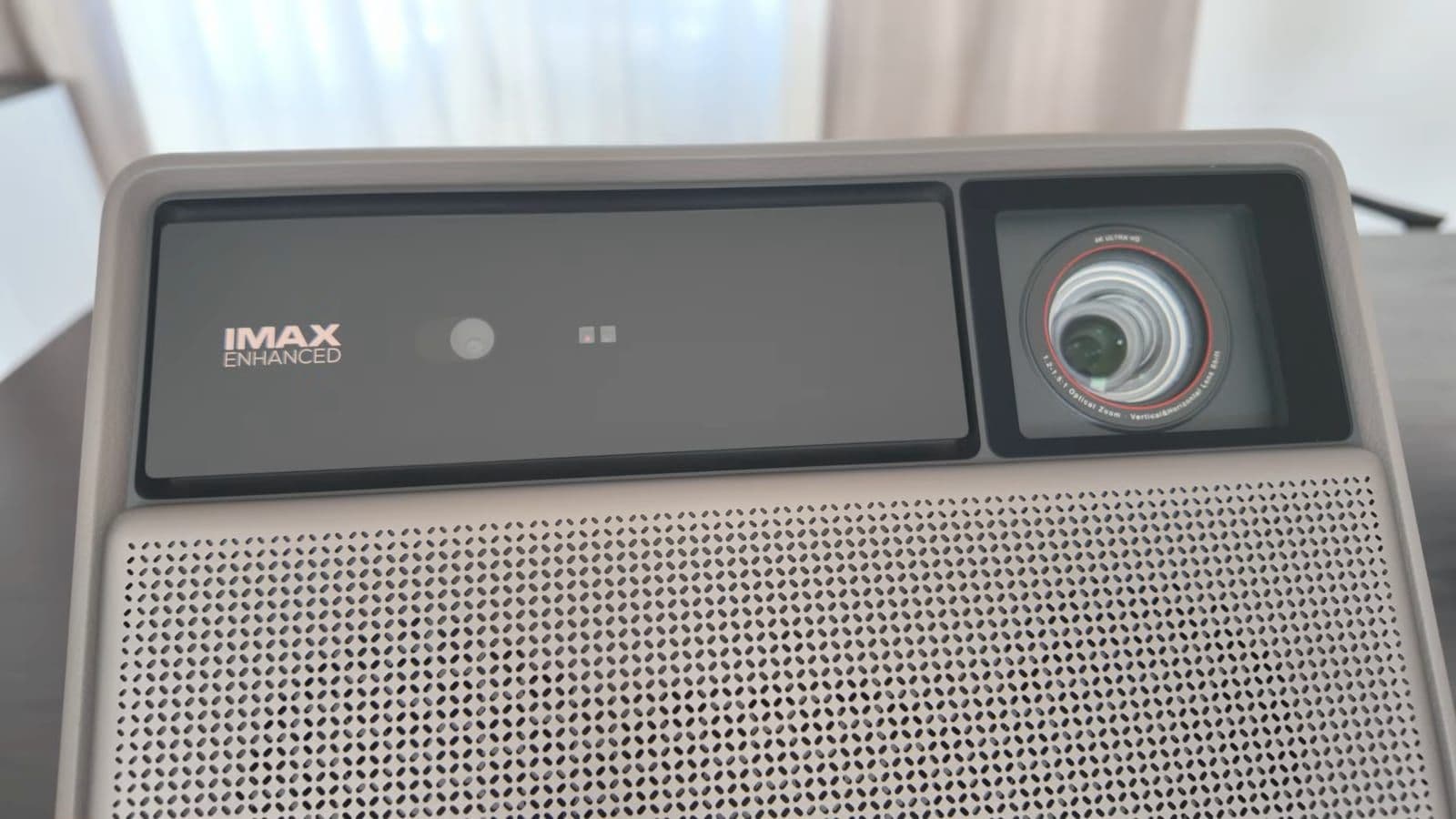
I projected both onto a motorized WUPRO FlowArc Black Crystal ALR screen, which cost €1,999.00 when checked on June 26, 2026. This screen uses a 0.8 gain ambient light rejecting material that blocks roughly 70 percent of off-axis room light. That rejection is necessary when evaluating black levels side by side.
As I mentioned in the comparison video, "So basically we're removing as many variables as possible." Both projectors received source video through a Zidoo Z9X 8K media player loaded with uncompressed 4K UHD Blu-ray rips. Real-time bitrates hovered between 80 and 90 megabits per second, preserving full dynamic range without streaming compression artifacts.
Capturing projectors on camera is notoriously tricky. I filmed everything using a DJI Osmo Pocket 3 locked at 4K 25 frames per second, a fixed shutter speed of 1/60s, and a manual white balance of 3700K. Any flicker or brief brightness fluctuation visible on YouTube came strictly from camera sensor processing. To my naked eyes, both projected images remained rock solid throughout testing.
Testing long fiber optic HDMI cables up to 50 meters
When you mount a projector in a dedicated cinema room, running long copper HDMI cables can introduce dropped frames or handshake failures. Copper cables struggle once you exceed five to seven meters at 4K HDR bandwidths.
For this shootout, I wired both machines using RUIPRO fiber optic HDMI cables, which are also available on Amazon. I had lengths of 20 meters, 30 meters, and 50 meters on hand, all equipped with detachable armored heads.
I ran full 4K HDR10 and Dolby Vision test files across all three cable lengths. I swapped the 20-meter and 50-meter lines between both projectors multiple times to verify if the 50-meter line introduced any noise or lag. As I noted during the test, "I tested all three cables on all three setups and exchanged them multiple times, and there was no difference at all." Signal delivery was instantaneous and completely clean across every run.
Contrast and shadow detail in Avengers and Batman v Superman
Dark scenes expose projector weaknesses faster than anything else. To push contrast, I queued up the final battle sequence from Avengers: Endgame, running a 60.65 GB rip with Dolby TrueHD Atmos and bitrates pushing 80 megabits per second.
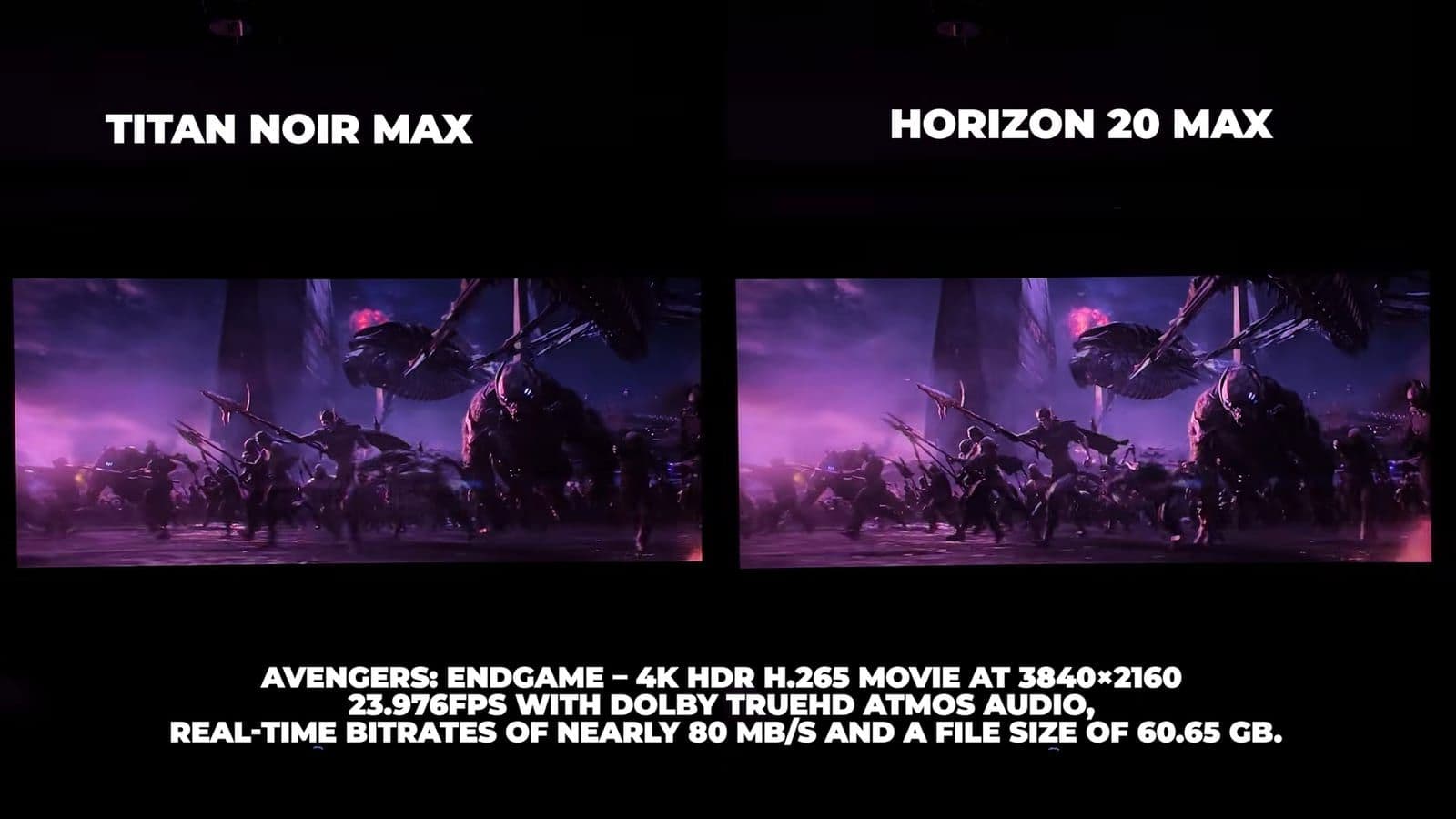
The difference was immediate. The Titan Noir Max held onto shadow gradations in the dusty rubble that became slightly muddy on the Horizon 20 Max. In high-contrast shots where bright magical blasts lit up dark skies, the Titan kept the surrounding dark sky much blacker while pushing higher peak specular highlights.
In the video, I put it plainly: "The bright parts hit harder, the dark parts still keep more detail, and the colors look stronger without looking completely fake or overdone." The Horizon 20 Max is far from bad. In fact, if you watch it on its own, its contrast feels punchy. But placed right next to the Titan Noir Max, the Horizon's letterbox bars and deep shadows look a touch more charcoal gray.
I saw the same pattern in Batman v Superman: Dawn of Justice, running from a massive 91.05 GB 4K file. During the rain-soaked night battle, the Titan Noir Max displayed superior dynamic range in specular water highlights against Batman's dark armor. The Horizon 20 Max kept the scene legible, but the Titan added real physical dimensionality to the image.
Color rendition and daylight highlights in F1 and Independence Day
Moving away from pure darkness, I tested color balance and motion tracking with high-speed, bright daylight scenes. The first test was the movie F1, playing a 64.44 GB file in Dolby Vision low-latency mode.
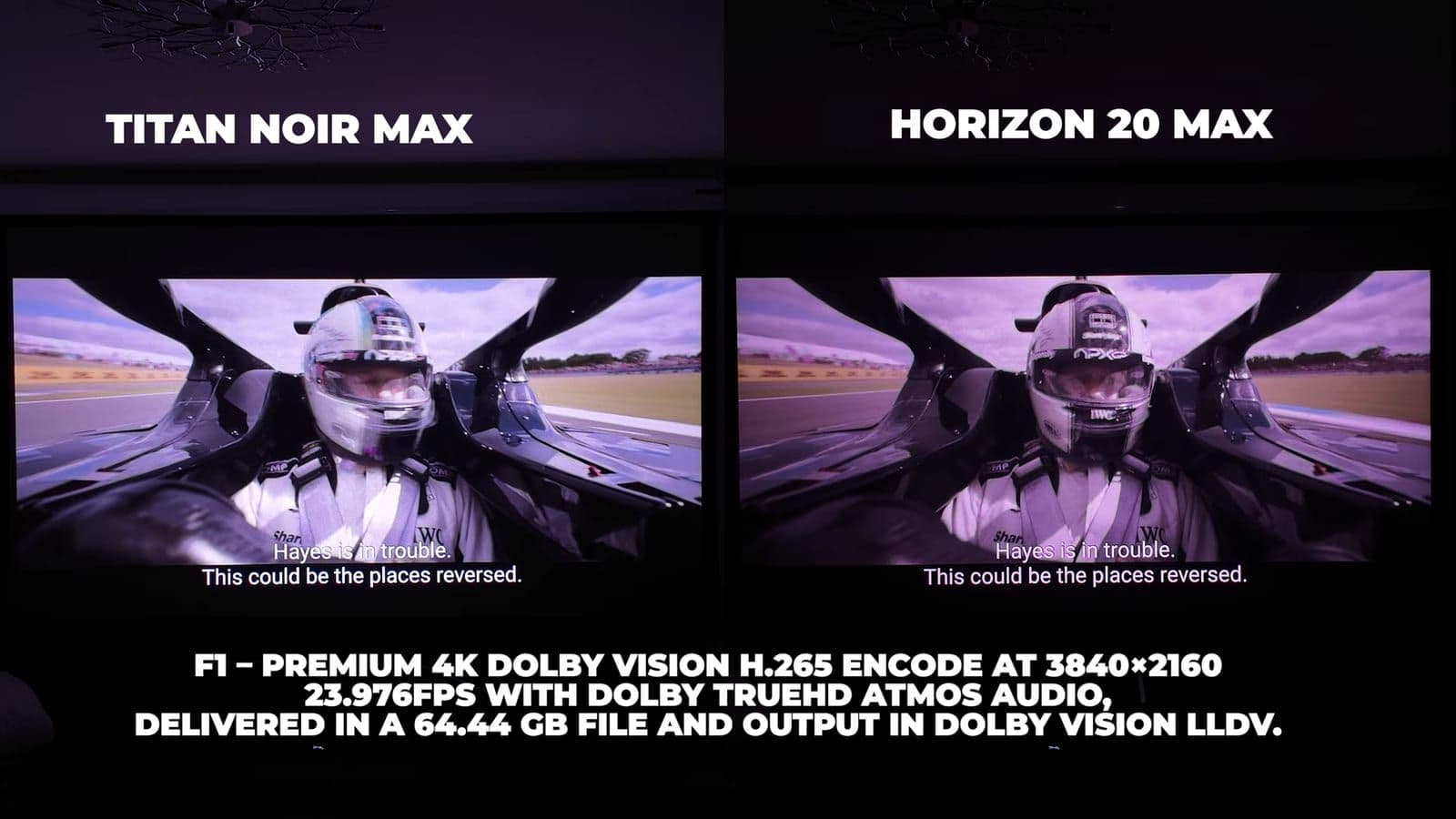
Racing cars speeding past grandstands showed that both projectors handle high-speed motion cleanly without distracting smear. However, the Titan Noir Max extracted finer detail from track asphalt, helmet visors, and direct sun reflections on car bodywork. Its tone mapping in Dolby Vision kept bright clouds from blowing out while maintaining proper exposure inside the cockpit.
Next, I loaded Independence Day, playing a native 4K HDR10 encode measuring 43.31 GB with DTS:X IMAX audio. During the city destruction scenes, bright neon laser blasts lit up the screen against daylight backdrops.
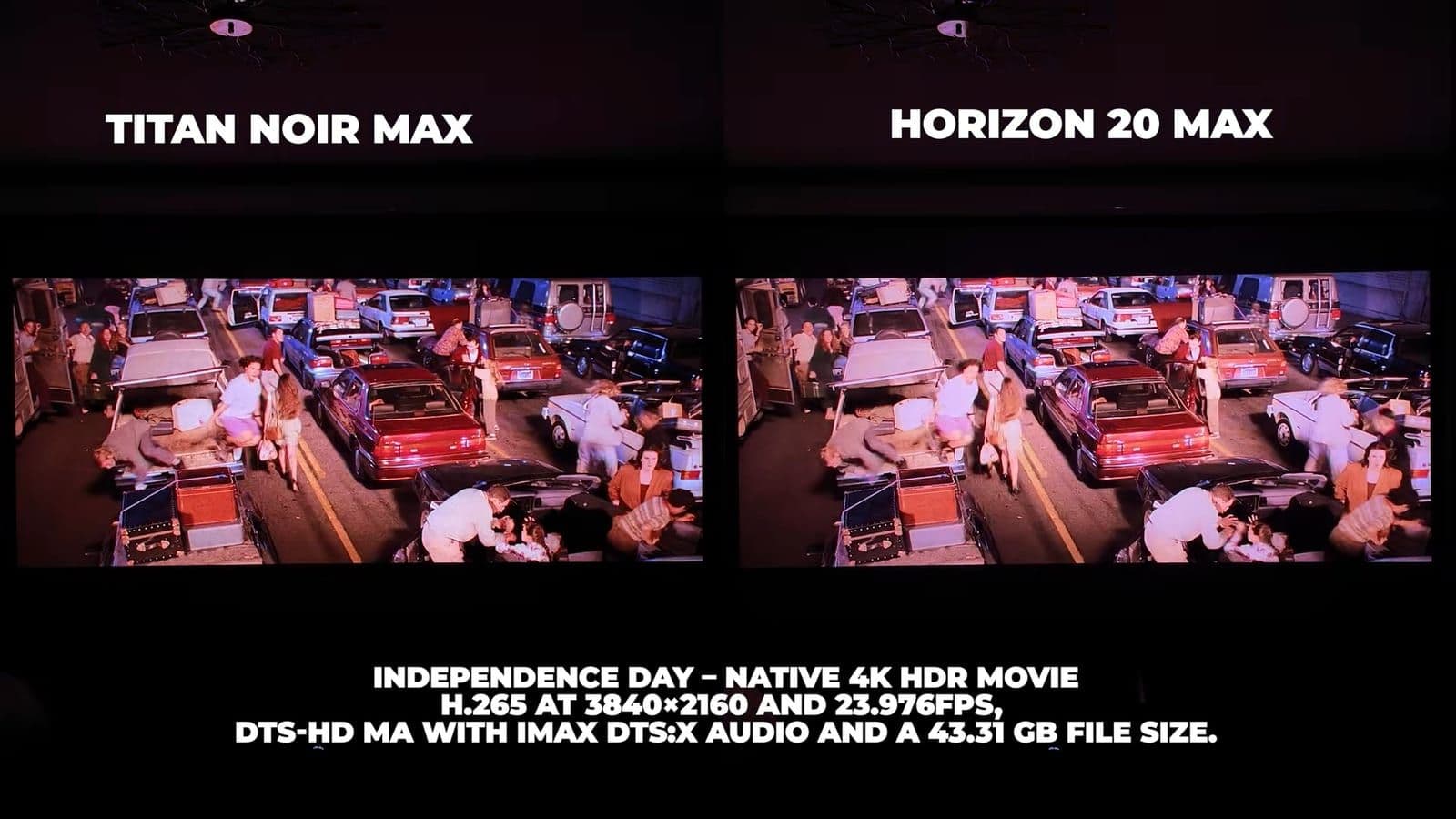
The Horizon 20 Max occasionally clipped highlight nuances inside intense orange fireball explosions. The Titan Noir Max resolved internal flame gradients and debris outlines while delivering richer red and orange saturation. Still, considering the Horizon 20 Max retails on the XGIMI store and on Amazon for half the price of the Titan, its ability to stay within striking distance on color accuracy was genuinely impressive.
Which projector should you actually buy
If money is secondary and you want the highest possible image quality from a lifestyle-friendly chassis, buy the Titan Noir Max. It is the absolute winner here for shadow detail, highlight punch, and overall picture depth. It transforms a dark theater room in a way that approaches dedicated high-end cinema hardware.
If you want the smart financial purchase, buy the Horizon 20 Max. It offers roughly eighty to eighty-five percent of the Titan's visual performance for half the cash. I use the Horizon 20 Max in my own home daily, and I never feel like I am missing out when watching movies with my family.
You should skip both if you intend to project onto an untreated white drywall in a room with open curtains. Neither projector will overcome full direct sunlight without a proper ambient light rejecting surface. If you do not plan to invest in high-bitrate media players and an ALR screen, your money is better spent elsewhere.
Frequently asked questions
Is the Titan Noir Max worth the extra $3,000 over the Horizon 20 Max?
It is only worth the extra money if you already own a high-gain ALR screen, keep your room dark, and demand reference-grade black levels. For typical movie watching in a normal living room, the Horizon 20 Max provides far better value for your money.
Do fiber optic HDMI cables make a visible difference over long runs?
Yes, over distances past ten or fifteen meters, fiber optic cables maintain signal integrity where standard copper cables fail. During my tests with RUIPRO cables at 20, 30, and 50 meters, playback was completely stable with zero dropouts or picture degradation.
Can both projectors handle native Dolby Vision and high-bitrate files?
Both handle high-bitrate 4K content reliably when connected to a capable source like the Zidoo Z9X 8K player. The Titan Noir Max handles Dolby Vision tone mapping slightly better in high-contrast scenes, keeping highlights intact without blowing out bright areas.